MECHANISTIC SYSTEMS RESEARCH · PRODUCT ARCHITECTURE · GOVERNED AI
Find the mechanism. Design the instrument. Build the intervention.
I investigate how complex systems produce preventable harm, design the instruments needed to detect it, and build products that make intervention operational.
My DOI-registered research program examines biological, cognitive, organizational, economic, and technological systems. I convert complex evidence into systems that recognize risk, preserve decision context, and produce accountable action.
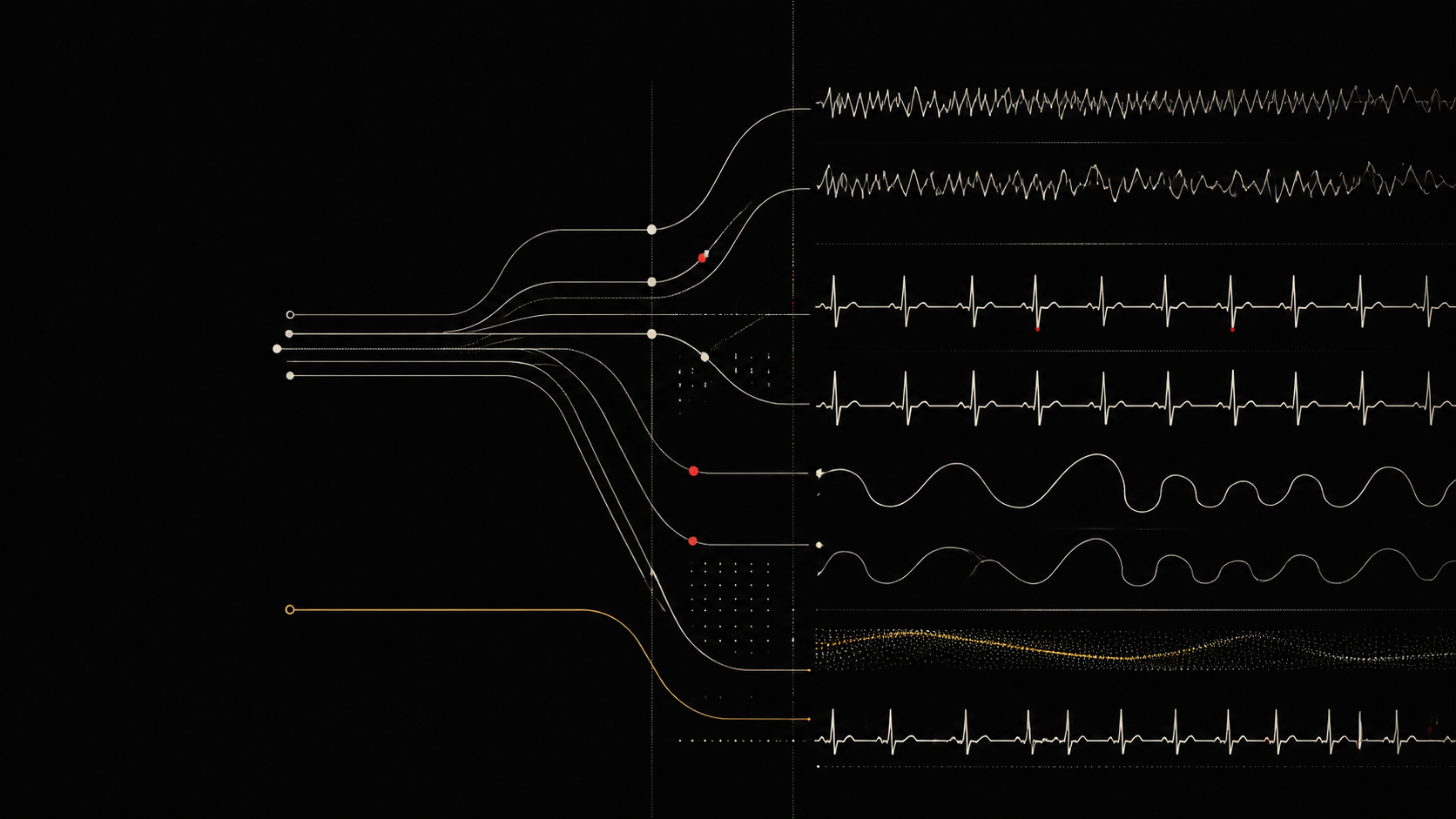
One coherent architecture
Research → measurement → product → governance → accountable action.
I work as a mechanistic systems researcher and product architect. I trace how outcomes emerge from interacting biological states, cognitive load, organizational behavior, economic incentives, workflow constraints, and technical systems, then build the structure needed to test and act on that model.
Research
Identify the failure pattern, map candidate mechanisms, reconcile evidence across disciplines, and define what remains unknown.
Measurement
Turn the model into constructs, longitudinal variables, decision instruments, classification logic, and falsifiable tests.
Product
Translate evidence into requirements, workflows, interfaces, physical products, prototypes, and commercialization paths people can inspect.
Governance
Preserve provenance, uncertainty, human authority, review points, accountability, and the evidence required for the next decision.
I care whether a product changes behavior for the better in the real world, not just whether it ships.
Flagship case study
The $15 Billion Silence COMPASS
Public DOI-registered research program · pre-validation measurement architecture
A cross-disciplinary research synthesis became an instrument for preserving timing, interacting exposures, function, severity, and safety across a longitudinal review.
This is the clearest expression of my research-to-product method: begin with a mechanism-level question, build the evidence architecture, define what can be measured, and make the next research decision inspectable.
01 / Problem
Converging mechanisms were split across separate literatures.
Reproductive-transition biology, menstrual-cycle sensitivity, neurosteroid dynamics, trauma, shift work, circadian disruption, sleep loss, and occupational conditions are often studied apart. The research asks how those pathways may converge in the nursing workforce without treating a proposed model as a settled finding.
02 / Research architecture
A testable agenda for mechanism, economics, and institutional response.
I independently authored the synthesis, compound neurobiological-deficit hypothesis, economic model, research agenda, and institutional-accountability framework. The complete paper was publicly deposited with DOI 10.5281/zenodo.20530544.
03 / Measurement translation
COMPASS carries the research into structured longitudinal review.
Developed directly from The $15 Billion Silence, COMPASS v1.0 organizes symptom timing, reproductive transition, adversity, trauma, function, severity, differential considerations, longitudinal observation, and safety review. Its next stage is formal psychometric and clinical validation.
PRISMqd and governed AI
A safety architecture for the full path from signal to confirmed response.
Early-stage clinical-safety operating architecture. First-named inventor on U.S. provisional patent application 63/928,719, filed December 1, 2025.
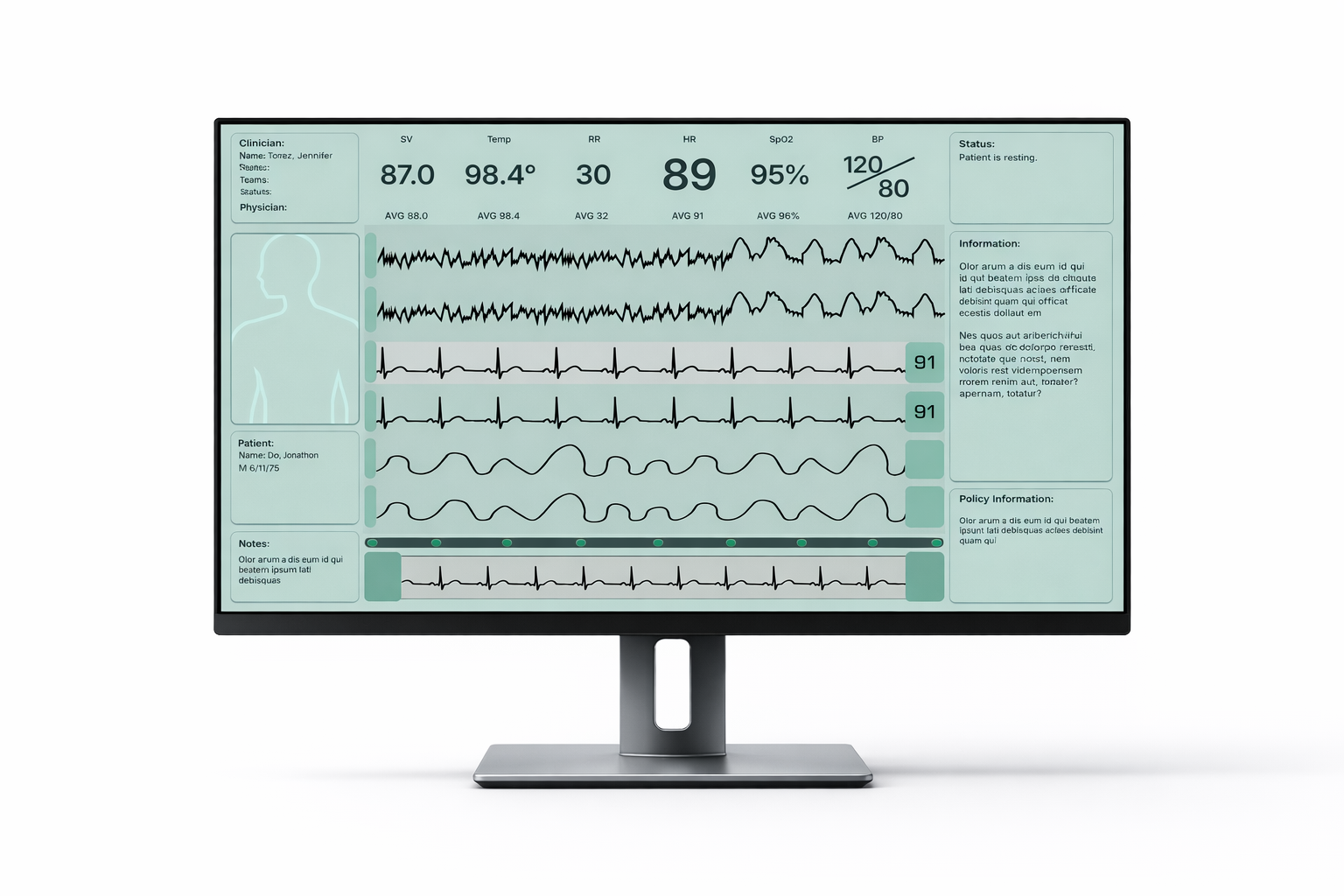
PRISMqd connects research, decision instruments, workflow models, interface concepts, and governance across recognition, context, escalation, response, reassessment, closure, measurement, and learning.
Failure-to-rescue is the first use case. The deeper product question is how a system preserves meaning, ownership, authority, and accountability as information crosses people, technologies, and time.
Socio-technical traceability
Accountability asks more than “did the program run?”
It also asks: “who owned the decision when the system broke down?” I use socio-technical traceability as a design principle for keeping system output, source evidence, decision context, operational capacity, human authority, action, and reassessment connected.
Governed orchestration
AI work remains inside an accountable production cycle.
My governed AI workflows combine controlled sources, scoped agent work, structured evidence, deterministic checks, independent evaluation, release gates, and destination readback. Models help organize evidence, compare records, draft specifications, and build inspectable artifacts. Human authority controls consequential decisions.
Research & IP architecture
A portfolio of frameworks, instruments, and product systems built around one question: where does meaning fail before action?
The portfolio spans organizational suppression, continuity risk, preventable-harm measurement, documentation, clinical workflow, biological-state estimation, and multimodal pattern research. Each artifact carries its own evidence state and next validation gate.
Public theoretical governance framework
CMDS ↗
Clinical Moral Disengagement Scaffolding examines how organizational conditions may suppress recognized risk before it reaches someone with authority to act. It defines candidate constructs for future measurement and intervention research.
Public original systems framework
CRF ↗
The Continuity Risk Framework follows risk through detection, recognition, interpretation, prioritization, communication, escalation, action, reassessment, and validation so each transition can be examined.
Working research instrument
PHC ↗
A structured preventable-harm classification and cost-modeling instrument developed from a separate unpublished research project. It preserves evidence status and uncertainty through case review and modeled analysis.
Working statistical instrument
MAM / MAModule ↗
A facility-level attribution instrument developed from the same separate unpublished research project. It compares reported-event baselines with explicit sensitivity scenarios and keeps evidence limits visible in every output.
Inspectable React and TypeScript source
SafeChart ↗
A clinician-controlled documentation system for chronology, observations, assignment, escalation attempts, responses, follow-up, and unresolved risk outside the patient record. Reproducible build and user evaluation define the next stage.
Working browser prototype
LineMap ↗
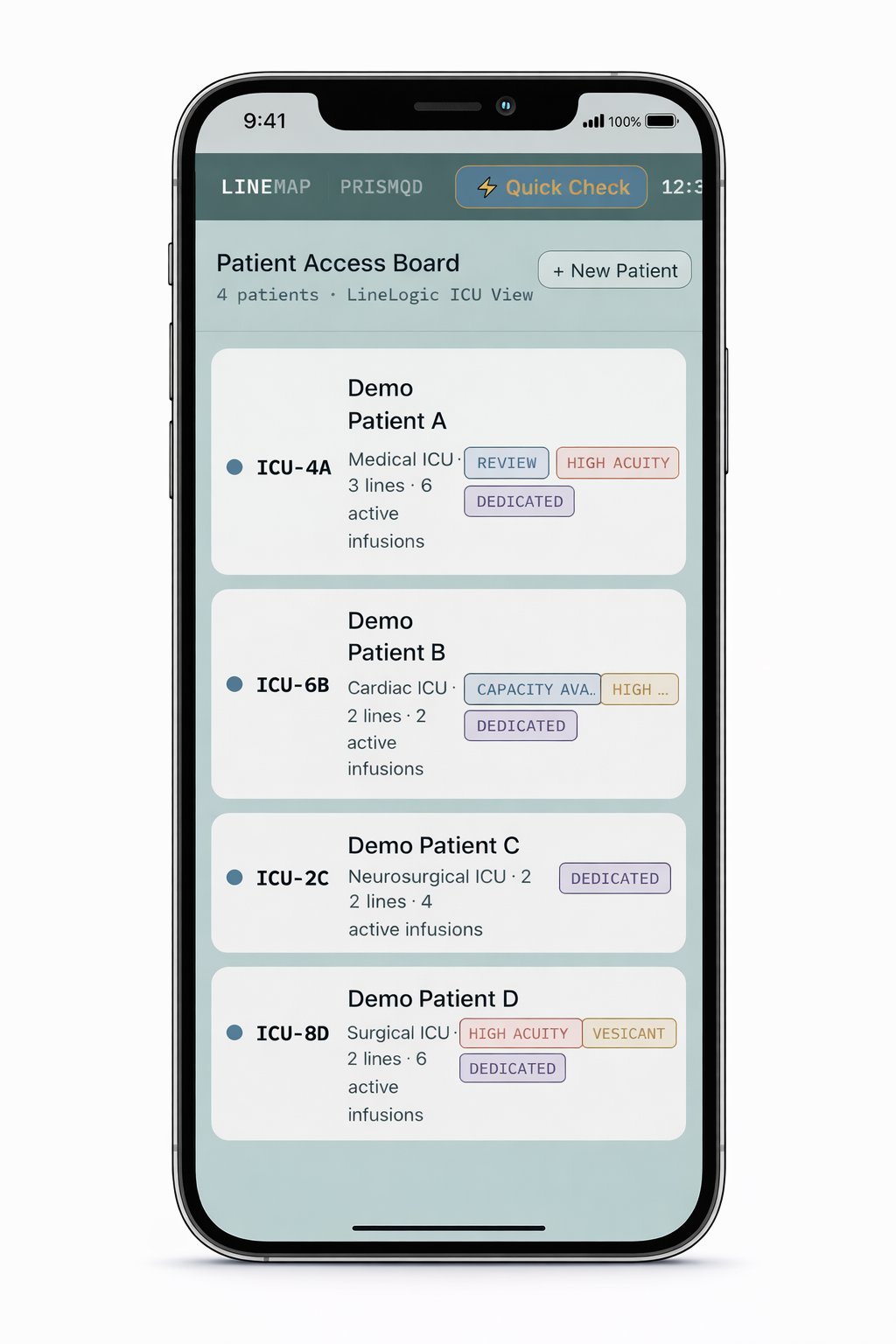
A bounded clinical workflow translated into structured IV-access mapping, infusion-to-lumen planning, compatibility constraints, and handoff continuity that another person can inspect.
Private pre-validation research architecture
BESE
The Biological Energy State Estimation Framework is a theoretical multimodal latent-state estimation architecture. It asks whether synchronized biological-signal channels can be studied as correlated views of a changing state. The integrated system is not built, tested, or validated.
IP-controlled pre-validation research architecture
BVGF
The Biological Visual Grammar Framework defines a falsifiable path for studying recurring geometric structure, symmetry, temporal pattern, and within-person consistency as candidate inputs for blinded biological correlation. Protected implementation detail remains private.
Public deposit establishes a persistent research record. It does not establish peer review, clinical validation, adoption, or outcome.
Physical product translation
The same architecture survives a change in medium.
The Mend and MendPRN show how I carry an observed need through formulation or product requirements, prototype decisions, supply-chain and manufacturing questions, responsible claims, and commercialization planning.
Research-to-prototype consumer product
The Mend ↗
I developed The Mend through research, formulation refinement, small-batch prototyping, manufacturer exploration, channel planning, and claim-safe customer education. The work demonstrates zero-to-one judgment across formulation, supply chain, physical production, and responsible market communication.
Precommercial institutional concept
MendPRN
A distinct single-patient, sealed, plant-based bedside-comfort concept organized around hygiene, traceability, bedside use, packaging logic, and institutional workflow. Protected formulation and manufacturing detail remain private.

How I build
From failure pattern to governed product learning.
The interface is the visible edge of the evidence, decision, and accountability system. I build enough of that system to test the real question before committing resources to scale.
Find the mechanism
Study where the system changes state, loses information, diffuses responsibility, or produces a repeatable failure.
Define the decision
Name the user, operating context, evidence, authority, constraints, and consequence of delay.
Design the instrument
Translate the model into constructs, variables, data structures, workflows, and falsifiable measures.
Build working proof
Create the smallest inspectable artifact that can test interaction logic, product behavior, or a research assumption.
Govern the work
Keep sources, evidence limits, human authority, review, reversibility, and release criteria explicit.
Decide what earns scale
Use the artifact and evidence to continue, revise, partner, commercialize, or stop.
Selected publications
Research records built to be read, challenged, and extended.
The public portfolio includes open-access preprints, original systems frameworks, policy architecture, case-based analysis, and applied research. The Failure-to-Rescue Report carries the work into ongoing public argument.
Read The Failure-to-Rescue Report ↗Partnership and R&D
For frontier AI teams building consequential products from emerging capability.
I am interested in partnership and R&D roles where research must become a new product category, a testable prototype, and a responsible path to real-world use. I am most useful when a team needs to understand an understructured problem, define what deserves measurement, and preserve human authority as the system evolves.